
UCF Returns to Rural Guatemala for Second EP Mission of the Year
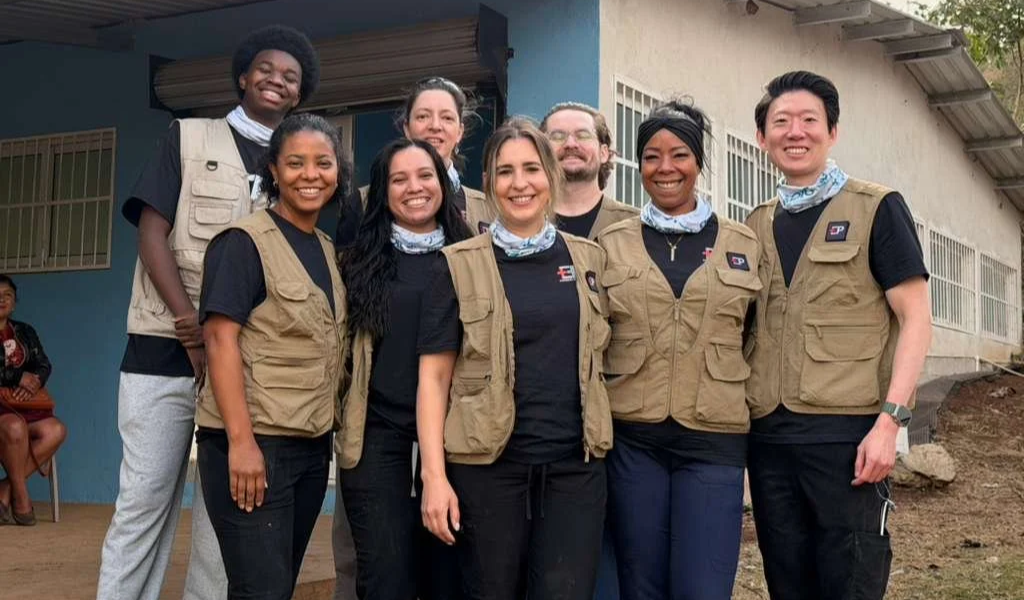
Earlier this month, a team from the University of Central Florida College of Medicine joined EP in rural southern Guatemala for our second mission of the year, working alongside our long-standing partners at Dream Invest Grow (DIG). Together, we delivered care to communities where access to even the most basic health services remains limited or entirely absent.
Our clinic in Valencia serves as a critical access point for 31 surrounding villages, many of which are hours from the nearest hospital. During this mission, the team cared for hundreds of patients presenting with a wide range of conditions—from untreated chronic diseases to acute infections and pediatric illness. In addition to clinic-based care, teams traveled into remote mountain communities to reach patients unable to make the journey themselves, ensuring that care extended beyond geographic barriers.
The need for services in this region reflects broader health disparities affecting Guatemala’s Indigenous Maya population. Nearly half of Guatemala’s population lives in rural areas, where access to healthcare infrastructure is limited. Indigenous communities face disproportionately high rates of malnutrition, with chronic malnutrition affecting approximately 46% of children under five—the highest rate in Latin America. Maternal mortality and preventable infectious diseases also remain significant challenges, particularly in areas with limited access to diagnostics and timely care.
What defines these missions is not only the volume of care delivered, but the approach. Emergency medicine—adaptable, resource-conscious, and systems-oriented—allows teams to address both acute and ongoing health needs in settings where continuity of care is not guaranteed. Through collaboration with local partners like DIG, EP is working to build more sustainable pathways for care, including follow-up systems, local staffing support, and ongoing community engagement.
To the UCF team, thank you for your commitment, humility, and clinical excellence. And to DIG, whose presence and leadership make this work possible, we are deeply grateful.
Together, we continue to expand access to care in communities where it has long been out of reach.
This is global emergency medicine.
